Beställningsvara. Skickas inom 7-10 vardagar. Fri frakt över 249 kr.
Beskrivning
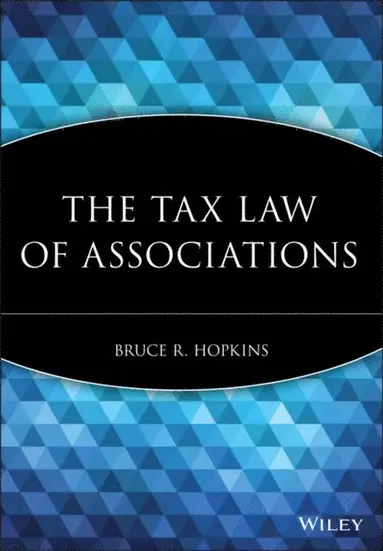
The Tax Law of Unrelated Business for Nonprofit Organizations is a comprehensive, authoritative examination on the tax law of unrelated business of exempt organizations. Provides detailed documentation and citations, including references to regulations, rulings, cases, and tax literature; an exhaustive index, Internal Revenue Code citations, tables of cases, and IRS rulings.Written by the leading legal authority in the nonprofit sector.
Bruce R. Hopkins is the country's leading authority on tax-exempt organizations and is a senior partner with the firm Polsinelli Shughart. He is the author or coauthor of more than 25 books, including The Law of Tax-Exempt Organizations, Ninth Edition, and the newsletter Bruce R. Hopkins' Nonprofit Counsel, all published by Wiley.
Recensioner i media
Select Guide Rating
Innehållsförteckning
PrefaceChapter One: Tax Exemption and Unrelated Business: Introduction1.1 Tax Exemption: A Perspective1.2 Source of Tax Exemption1.3 Tax-Exempt Organizations1.4 Philosophical Principles of Exempt Organizations Law.1.5 Categories of Tax-Exempt Organization1.6 Rationale for Unrelated Business Rules1.7 Organizations Subject to Unrelated Business Rules1.8 Tax Exemption and Competition1.9 Concise History of the Unrelated Business Rules1.10 Private Inurement and Private Benefit1.11 Determining Allowable Unrelated BusinessChapter Two: Unrelated Business: The Basics.2.1 The Analytic Framewor2.2 Definition of Trade or Business2.3 Fragmentation Rule2.4 Profit Motive Requirement2.5 Definition of Regularly Carried On2.6 Definition of Related Business2.7 Definition of Substantially Related BusinessChapter Three: Modifications.3.1 Passive Income in Genera3.2 Dividends3.3 Interest3.4 Securities Lending Income3.5 Certain Consideration3.6 Annuities3.7 Royalties3.8 Rent3.9 Other Investment Income3.10 Capital Gains3.11 Gain from Lapses or Terminations of Options3.12 Loan Commitment Fees3.13 Research Income3.14 Electric Companies' Member Income3.15 Foreign Source Income3.16 Brownfield Sites Gains3.17 Religious Order Rule3.18 Charitable Deduction3.19 Specific Deduction3.20 Net Operating LossesChapter Four: Exceptions4.1 Convenience Businesses4.2 Businesses Conducted by Volunteers4.4 Entertainment Activities4.5 Trade Shows4.6 Hospital Services4.7 Gambling Activities4.8 Associate Member Dues4.9 Low-Cost Articles4.10 Mailing Lists4.11 Businesses of Employees' Associations4.12 S Corporation Holdings and Sales4.13 Pole Rental ActivitiesChapter Five: Unrelated Debt-Financed Income Rules5.1 History and Overview of Rules5.2 Unrelated Debt-Financed Income5.3 Debt-Financed Property5.4 Acquisition Indebtedness5.5 Computation of Unrelated Debt-Financed IncomeChapter Six: Special Rules6.1 Rules for Social Clubs6.2 Rules for Certain Other Tax-Exempt Organizations6.3 Private Foundation Rules6.4 Partnership Rules6.5 Advertising6.6 Corporate SponsorshipsChapter Seven: Commercial Activities7.1 Commerciality Doctrine: Origins7.2 Contemporary Perspective on Doctrine7.3 Commercial-Type Insurance Rules7.4 Credit Counseling Organizations7.5 Social Enterprise Movement7.6 Commerciality and Unrelated Business RulesChapter Eight: Use of Separate Entities8.1 Necessity of Separate Entity8.2 Choice of Form8.3 Element of Control8.4 Attribution Considerations8.5 Capitalization8.6 Sharing of Resources8.7 Liquidations8.8 Controlled Organizations8.9 Partnerships and Joint Venture Basics8.10 Flow-Through Entities8.11. Partnerships—Details8.12 Limited Liability Companies—Details8.13 Other Joint Ventures8.14 Whole Entity Joint Ventures8.15 Ancillary Joint Ventures8.16 Law-Imposed Joint Ventures8.17 Look-Through Rule—DetailsChapter Nine: Contemporary Applications of the Unrelated Business Rules9.1 Educational Institutions9.2 Health Care Providers9.3 Museums9.4 Associations9.5 Labor and Agricultural Organizations9.6 Fundraising Activities9.7 Travel Opportunities9.8 Provision of Services9.9 Sharecrop Leasing9.10 Retirement Plan Reversions9.11 Exempt Functions as Unrelated Business9.12 Other Instances of Related Business9.13 Other Instances of Unrelated Business9.14 Agency RuleChapter Ten: Unrelated Business and the Internet10.1 State of the "Law"10.2 Two Overarching Issues10.3 Web-Based Business: Tax Law Perspective10.4 Web Site Advertising10.5 Web Site Corporate Sponsorships10.6 Trade Shows10.7 Merchandising10.8 Auctions10.9 Charity Malls10.10 Merchant Affiliate Programs10.11 Associations10.12 Web Site Material as Periodical10.13 Royalty Arrangements10.14 Questions Posed by IRS Announcement10.15 SummaryChapter Eleven: Reporting Requirements11.1 Tax Structure11.2 Deduction Rules11.3 Annual Information Return11.4 Unrelated Business Income Tax Return11.5 Other Rules Concerning Preparation and Filing of ReturnAppendicesAppendix A: Sources of the LawAppendix B: Internal Revenue Code SectionsAppendix C: GlossaryAppendix D: Form 990Appendix E: Form 990 TAppendix F: Codes for Unrelated Business ActivityTablesTable of CasesTable of IRS Revenue Rulings and Revenue ProceduresTable of IRS Private Determinations Cited in TextTable of Related IRS Private DeterminationsTable of Cases Discussed in Bruce R. Hopkins' Nonprofit CounselTable of IRS Private Determinations Discussed in Bruce R. Hopkins' Nonprofit CounselIndex