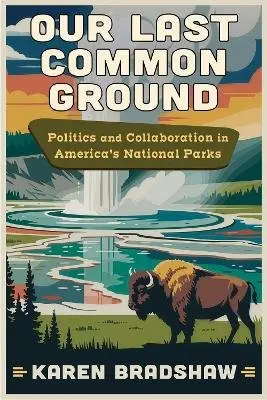
One-third of the United States—more than 660 million acres—belongs to the people. National parks and other public lands do more than just preserve spectacular landscapes. They are also a hidden cornerstone of democracy, fostering collaborative governance that brings together deeply divided groups to manage shared resources while protecting biodiversity, watersheds, and wildlife. In Our Last Common Ground, the legal scholar Karen Bradshaw, one of America’s most thoughtful voices on protecting the wild, invites readers inside public lands and reveals the deliberative democratic processes that govern them. Telling the stories of people and wildlife, she explores fascinating controversies unfolding across the country: the debate over an open-pit copper mine on sacred Indigenous lands in Oak Flat, Arizona; the battle over snowmobile access in Yellowstone National Park; water management at the Shasta Dam balanced against Chinook salmon restoration; and many others.Bradshaw reveals the vitality of the laws and collaborative governance models that manage public lands, showing how they overcome deep polarization by facilitating communal decision-making. This successful navigation of fraught issues provides crucial lessons for everyone from national leaders to regional stakeholder groups and ordinary people. Illuminating the fragility and importance of public lands in the United States, Our Last Common Ground offers a bold call to double the number of national parks.