
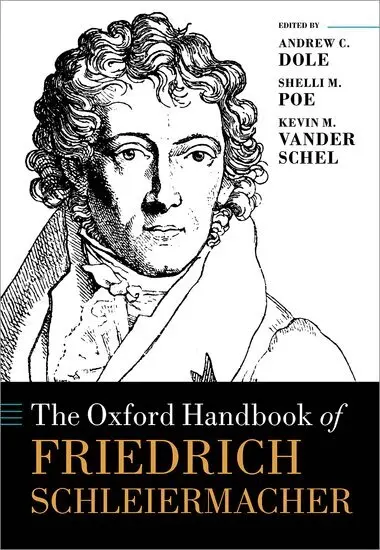
Friedrich Schleiermacher
Mediating, Reformed, Modern
1 352 kr
Kommande. Bevaka för att få ett mejl när produkten kan beställas.
Beskrivning
This book combines Schleiermacher's theology with the historical details of his life and times, pairing them at every turn to yield a robust understanding of Schleiermacher's theology in its context. Rather than viewing Schleiermacher abstractly as the "father of modern theology," this volume emphasizes his embeddedness in the political, social, ecclesial, and intellectual upheavals of late eighteenth- and early nineteenth-century Europe. Schleiermacher lived through the French Revolution, engaged with Berlin's cultural elites, served as a pastor, and participated in public and political life. These overlapping contexts shaped both his theology and his conviction that theology itself is inherently historical. Each chapter considers aspects of Schleiermacher's theology and its historical context. After an Introduction to Schleiermacher's context, the second chapter presents him as a mediating thinker. Focusing on Schleiermacher's Christology and his understanding of redemption, it asks how Schleiermacher understands the significance of Jesus's gender in the midst of Romantic gender constructions, how Schleiermacher treated Jesus's Jewish faith and messianic claims in the context of broad European antisemitism and the Berlin debate over Jewish citizenship, and it explores Schleiermacher's position on Prussia's Wars of 1813–1815 and the monarchy in relation to Christ's kingship. The third chapter highlights Schleiermacher's standing as a Reformed theologian, pairing his ecclesiology, pneumatology, and eschatology with his socio-cultural and political contexts, including the relationship between church and state, free sociability, colonialism, and the emergence of theories of race. The fourth chapter emphasizes Schleiermacher as a modern theologian. It analyses his understanding of theology as a discipline and the doctrines of God, creation, and the Trinity in his academic context. By detailing Schleiermacher's understanding of God and God's relation to the world along with the scientific advancements of the day, it highlights his notion of an "eternal covenant" between faith and science. By interpreting Schleiermacher's theology within his historical context, the book emphasizes both his enduring relevance and the broader insight that all theology is shaped by its historical setting.
Produktinformation
Utforska kategorier
Mer om författaren
Hoppa över listan
Mer från samma författare
The Constructive Promise of Schleiermacher's Theology
Shelli M. Poe, Marion Grau
Inbunden, 2021
1 438 kr


Hoppa över listan
Du kanske också är intresserad av
The Constructive Promise of Schleiermacher's Theology
Shelli M. Poe, Marion Grau
Inbunden, 2021
1 438 kr