

Genetic Superpower
International Rivalry in the Age of Weaponizable Biotechnology
305 kr
Kommande. Bevaka för att få ett mejl när produkten kan beställas.
Fler format och utgåvor
Beskrivning
Defense establishments worldwide are at once alarmed and intrigued by advances in genetic engineering. The ability to modify organisms by altering their DNA or design new life from scratch is rapidly becoming a strategic asset that may complement, rival, or even exceed cyber and nuclear capabilities. Alongside parallel advances in artificial intelligence, neurotechnology, nanotechnology, and robotics, it is giving rise to a new form of global power exercised at the molecular level. The emergence of this “genetic superpower” raises a central question: what happens to international relations when the building blocks of life become instruments of war?At the heart of this inquiry are genetic weapons, an emerging manifestation of biological power in which the genetic material of an agent is deliberately altered for hostile purposes. The agent can be a minimal biological entity such as a virus or as complex as a human being. Its effects can range from mass-scale destruction comparable to nuclear weapons to micro-scale interventions unprecedented in history. Genetic Superpower argues that genetic weapons have the potential to reshape international relations by transforming both the character and nature of war. They could extend the battlefield beyond all existing limits while making wartime violence appear more “humane,” even as they subvert the longstanding principles of consent and sovereignty.The analytical framework leverages new empirical evidence and methodological innovation. Drawing on original data from the United States, China, Russia, and India, it integrates comparative historical analysis, scenario analysis, the Delphi method, and wargaming to stress-test its core claims. Yelena Biberman translates the findings into ethical and policy recommendations for decision-makers, military strategists, scientists, and officials in international institutions, proposing a “grand strategy of peace” that aligns technological innovation with responsible governance and global cooperation.
Produktinformation
Utforska kategorier
Hoppa över listan



Mer från samma serie
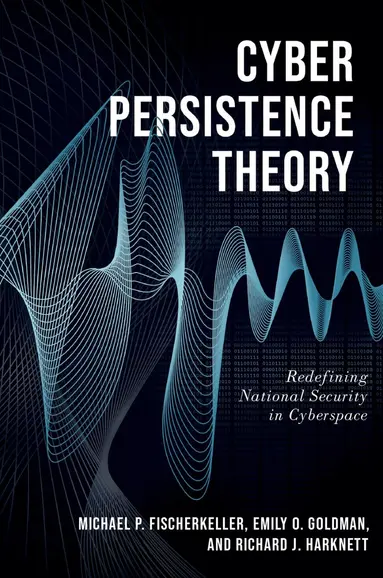
Cyber Persistence Theory
Michael P. Fischerkeller, Emily O. Goldman, Richard J. Harknett
Häftad, 2022
420 kr
- Nyhet
Cyber Persistence and Campaigning
Michael P. Fischerkeller, Emily O. Goldman, Richard J. Harknett
Häftad, 2026
290 kr
Hoppa över listan





Du kanske också är intresserad av
- Nyhet
Cyber Persistence and Campaigning
Michael P. Fischerkeller, Emily O. Goldman, Richard J. Harknett
Inbunden, 2026
1 296 kr
Coercing Syria on Chemical Weapons
Matthew Moran, Wyn Q. Bowen, Jeffrey W. Knopf
Inbunden, 2025
1 522 kr