The Neuroscience of Aging
AvColin R. Martin,Victor R. Preedy
4 250 kr
Beställningsvara. Skickas inom 10-15 vardagar. Fri frakt över 249 kr.
Beskrivning
Produktinformation
- Utgivningsdatum:2021-06-25
- Mått:216 x 276 x 156 mm
- Vikt:4 400 g
- Format:Häftad
- Språk:Engelska
- Antal sidor:1 352
- Förlag:Elsevier Science
- ISBN:9780128183694
Utforska kategorier
Mer om författaren
Colin R. Martin RN, BSc, MSc, PhD, MBA, YCAP, FHEA, C.Psychol, AFBPsS, C.Sci is Professor of Clinical Psychobiology and Applied Psychoneuroimmunology and Clinical Director of the Institute of Health and Wellbeing at the University of Suffolk, UK. He is a Chartered Health Psychologist and a Chartered Scientist. He also trained in analytical biochemistry, this aspect reflecting the psychobiological focus of much of his research within mental health. He has published or has in press well over 300 research papers and book chapters. He is a keen book author and editor having written and/or edited more than 50 books. These outputs include the prophetic insight into the treatment of neurological disease, Handbook of Behavior, Food and Nutrition (2011), Nanomedicine and the Nervous System (2012), Oxidative Stress and Dietary Antioxidants in Neurological Disease (2020), Zika Virus Impact, Diagnosis, Control and Models (2021), Factors Affecting Neurodevelopment: Genetics, Neurology, Behavior and Diet (2021), Diagnosis and Treatment of Spinal Cord Injury (2022), The Neurobiology, Physiology, and Psychology of Pain (2022) and The Handbook of Lifespan Cognitive Behavioral Therapy: Childhood, Adolescence, Pregnancy, Adulthood, and Aging (2023). Professor Martin is particularly interested in all aspects of the relationship between underlying physiological substrates and behavior, particularly in how these relationships manifest in both acute and chronic psychiatric disorder. He has published original research germane to significant mental health disorders including the areas of schizophrenia, anxiety, depression, self-esteem, alcohol and drug dependency, high secure forensic mental health and personality disorder. He has a keen interest in the impact of postviral illness and is actively involved in clinical research post-Covid pandemic and in particular, the impact of Long Covid on psychological, neurological, physiological and social functioning. He is involved in collaborative International research with many European and Non-European countries. Victor R. Preedy, BSc, PhD, DSc, FRSB, FRSPH, FRCPath, FRSC, FRSM, is Professor of Clinical Biochemistry (Hon) at King’s College Hospital and Emeritus Professor of Nutritional Biochemistry at King’s College London. He also holds an Honorary Professorship at the University of Suffolk and served as the long‑term Director of the Genomics Centre at King’s College London from 2006 to 2020. Professor Preedy graduated with an Honours Degree in Biology and Physiology with Pharmacology and later obtained his PhD from the University of London. He subsequently received Membership of the Royal College of Pathologists and later earned his second doctorate (DSc) in recognition of his contributions to protein metabolism. He is a Fellow of the Royal Society of Medicine, the Royal Society of Biology, the Royal College of Pathologists, the Royal Society for the Promotion of Health, the Royal Institute of Public Health and Hygiene, the Royal Society for Public Health, and the Royal Society of Chemistry. Professor Preedy has conducted research while affiliated with Imperial College London, the School of Pharmacy (now part of University College London), and the MRC Centre at Northwick Park Hospital. He has collaborated widely with international research groups in Finland, Japan, Australia, the USA, and Germany. His longstanding academic interests include health and well‑being. He has published more than 750 works, including peer‑reviewed research articles, abstracts, symposium presentations, reviews, and edited books.Dr Rajkumar Rajendram is a clinician-scientist with expertise in internal medicine, anaesthesia, intensive care and peri-operative medicine. He graduated with distinctions from Guy’s, King’s and St Thomas’ Medical School, King’s College London, in 2001, where he received several prizes, merits and distinctions in pre-clinical and clinical subjects.Dr Rajendram completed specialist training in acute and general medicine in Oxford and subsequently held a Consultant appointment in Acute General Medicine at the John Radcliffe Hospital, Oxford. He also trained in anaesthesia and intensive care in London, including advanced training in regional anaesthesia and intensive care, and subsequently held a Consultant appointment in Intensive Care, Anaesthesia and Peri-operative Medicine at the Royal Free London Hospitals.His postgraduate training has spanned internal medicine, anaesthesia, intensive care and point-of-care ultrasound (POCUS). He was awarded Fellowship of the Royal College of Anaesthetists in 2009, Fellowship of the Faculty of Intensive Care Medicine in 2013, and the European Diploma in Intensive Care Medicine in 2014. He is a Fellow of both the Royal College of Physicians of Edinburgh and the Royal College of Physicians of London.Dr Rajendram is currently a Consultant at King Abdulaziz Medical City, Ministry of National Guard Health Affairs, Riyadh, Saudi Arabia, and holds a joint appointment as Associate Professor in the Research Unit, Department of Medical Education, at King Saud bin Abdulaziz University for Health Sciences.His multidisciplinary clinical background has informed his research interests in nutrition, fluid management and fluid balance in health and disease, particularly in acutely and critically ill patients. His research has also addressed POCUS, COVID-19 phenotypes and nutritional support in illness. Dr Rajendram has contributed extensively to medical research and education and has authored more than 400 textbook chapters, review articles, peer-reviewed papers and conference abstracts.
Innehållsförteckning
- Assessments, Treatments and Modeling in Aging and Neurological Disease: The Neuroscience of AgingI. Introductory chapters: Setting the scene for the neuroscience of aging 1. The concept of productive aging; 2. Quality of life in the over 80s; 3. Successful aging and diet; 4. The impact of positive social relations on the quality of life of older people. An alternative to medicalization from an integral perspective; 5. The brain in life span: use of phase fMagnetic Resonance Imaging (MRI); 6. Neuronal structure in aging: Cytoskeleton in health and disease; 7. Sporadic Alzheimer’s Triad: Age, Sex, and ApoE; 8. How polymorphisms impact: BDNF polymorphism, inhibitory performance and the elderly; 9. Menopause as an aging process and alcohol misuse; 10. Brain banking and aging II. Impairments and Diseases11. Dementia or no dementia in the very elderly. Why?; 12. Neuropsychology, Social Cognition and Loss of Insight in Frontotemporal Dementia; 13. Neuroinflammation in the elderly; 14. Cortical microinfarcts and the aging brain; 15. Vascular brain injury and neurodegeneration in elderly racial and ethnic minority populations; 16. Hearing loss amongst the elderly; 17. Aging Auditory Cortex: The Impact of Reduced Inhibition on Function; 18. Aging and vestibular disorders; 19. Brain aging in HIV and antiretrovirals; 20. Antioxidants, Methylmercury, and Aging; 21. Aging and the effects of ethanol on the brain: Comparing the effects of different agingIII. Biomarkers And Diagnosis 22. Aging brain: Radiological biomarkers; 23. Plasma ADAM10 as a biomarker of mental impairment in the elderly; 24. Circulating microRNAs as biomarkers of healthy elderly; 25. DHEA as a biomarker of aging in humans and nonhuman primates: Synthesis, neuroprotection and cognitive function; 26. Evaluation of subjective memory abilities in elderly people; 27. The Functional Activities Questionnaire: Applications to aging; 28. Autobiographical memory as a diagnostic tool in aging; 29. Assessment tools for subjective memory abilities in elderly people; 30. Knowledge of Memory AgingIV. Management and Treatments 31. Pharmacological use of transient receptor potential (TRP) ion channel antagonists in neurological disease: effects on swallowing and implications for nutrition; 32. Aripiprazole: features and use in the aged; 33. Cognition-Enhancing Drugs and Applications to Aging; 34. Creatine supplementation and impact on the aging brain; 35. Photobiomodulation as a brain-boosting strategy in aging; 36. Innovation in deep brain stimulation in aging: a focus on Parkinson Disease; 37. Exergames: what they are and how they can be used to improve cognition in aging; 38. Linking cognitive decline and ballroom dance as a therapeutic intervention in the elderly; 39. Active experiencing training in the elderly; 40. Psychiatric self-management, smartphone apps and older adults; 41. Psychosocial Interventions for Suicide Prevention in the Elderly: Advances and Future DirectionsV. Models And Modelling42. D-galactose-induced aging and brain mitochondria; 43. Drosophila as a model organism in ageing research; 44. The Zebrafish (Danio rerio) and its uses for understanding the neuroscience of aging: applications and observation; 45. Murine models of primary Tauopathy as a model of aging; 46. Modelling nutrition and brain aging in rodents; 47. Modelling primates and neurological aging: a focus on Alzheimer's disease; 48. Linking aging and animal models to neurodegeneration: the Striatum, Substantia Nigra and Parkinson's Disease; 49. Behavioral evaluation of agingVI. Resources50. Research and recommended resources in the neuroscience of agingFactors Affecting Neurological Aging: Genetics, Neurology, Behavior, And DietI. Genetics, Molecular and Cellular Biology1. Genetics of frontotemporal dementia; 2. Aging, brain-derived neurotrophic factor (BDNF) and its polymorphism; 3. Aging, demented patients, and polymorphisms in cytokine genes; 4. RNA fragments and brain aging; 5. Centrosome functions and remodeling during neuronal development and centrosome abnormalities in neuronal disorders, disease, and in aging; 6. Brain aging and microarray analysis; 7. Human nuclear tau and aging; 8. Lipoxidation: features, neurological tissues and aging; 9. Aging and brain amino acids; 10. How 3’,5’-cyclic nucleotide phosphodiesterases change in the brain with normal aging and dementia; 11. The prohibitin complex in aging and neurodegeneration; 12. Synaptic ATPase and energy metabolism in the nervous system: roles and changes in the aging process II. Neurological and Imaging Features13. Microstructural Imaging of the Human Brain with Normal and "Abnormal" Aging using Diffusion Magnetic Resonance Imaging; 14. Imaging the brain and its vascular in aging: applications of optical coherence tomography angiography; 15. Potential involvement of perineuronal nets in brain aging: an anatomical point of view; 16. Grey-matter networks in aging; 17. Brain synapse-related proteins what they do and how they change in aging; 18. Macro- and chaperone-mediated autophagy in aging; 19. Neuronal L-type calcium channels in aging; 20. D-serine-regulated glutamatergic transmission and microglia: impact of aging; 21. Voltage-gated potassium channels and the aging brain; 22. Dendritic spine remodeling and aging; 23. High-density lipoprotein-cholesterol and neuroaging: memory, gyrification of the insular and frontal opercular cortex; 24. Astrocyte and microglial aging: morphology and modelling; 25. Neural scaffolding: features, profiles and the aging cerebellum; 26. BACE1 RNAi, memory and aging; 27. Aging, myelination and the optic nerve; 28. Linking proteostasis, brain aging, and ischemia; 29. Luteinizing hormone and the aging nervous system; 30. Insights into aging using transcranial magnetic stimulation; 31. Alpha rhythms: What they are and how they alter with aging; 32. Nicotine and its derivatives in healthy brain aging III. Physiological Aspects 33. Environmental enrichment and physiological aging; 34. Treadmill exercise and neuroinflammation: links with aging; 35. Impact of aerobic exercise on brain structure in models of aging: hippocampus and beyond; 36. The physiology of fitness and the brain in aging; 37. Aging, Babble Noise and the processing of speech perception; 38. The blood-brain barrier in agingIV. Behavior And Psychopathological Aspects 39. Linking aging, anticholinergic drug use, and cognitive impairment; 40. Cognitive Frailty: Definition, components and impact on disability, and mortality; 41. The physiology of the "Brain-muscle loop" in aging; 42. Disentangling the effects of aging and ovarian hormone loss on sleep: Implications for health and disease; 43. Role of DNA methylation in aging-related cognitive functioning'; 44. Depression in the elderly and psychobioticsV. Diet And Nutrition45. Aging, dietary patterns and cognition; 46. Geriatric nutritional risk index: Application, and limitations; 47. Diet, inflammatory biomarkers, and brain aging; 48. DASH diet and brain aging; 49. The ketogenic diet and healthy brain aging; 50. Autophagy and aging: diet, exercise, and the link with the target of rapamycin complex 1 (TORC); 51. Dietary Flavonoids and Brain Health in Ageing: food for Thought; 52. Antioxidant effects of curcumin and neuroaging; 53. Lipoic acid and vitamin D3 and their use in preventing brain aging; 54. Aging and working memory: Impact of the leucine metabolite beta hydroxy-beta-methyl butyrate; 55. Hydration, the brain and aging
Mer från samma författare
Diet and Nutrition in Dementia and Cognitive Decline
Victor R. Preedy, Colin R. Martin
3 108 kr
Metabolism and Pathophysiology of Bariatric Surgery
Victor R. Preedy, Rajkumar Rajendram, Colin R. Martin
Häftad, 2016
1 648 kr
Metabolism and Pathophysiology of Bariatric Surgery
Colin R. Martin, Rajkumar Rajendram, Victor R. Preedy
1 742 kr
Genetics, Neurology, Behavior, and Diet in Dementia
Colin R. Martin, Victor R. Preedy
Inbunden, 2020
2 068 kr
Genetics, Neurology, Behavior, and Diet in Dementia
Victor R. Preedy, Colin R. Martin
2 863 kr
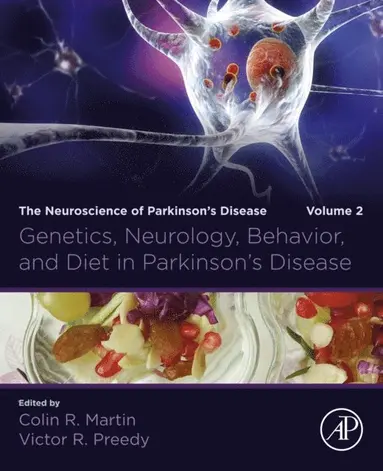
Genetics, Neurology, Behavior, and Diet in Parkinson's Disease
Colin R. Martin, Victor R. Preedy
Inbunden, 2020
2 068 kr
Genetics, Neurology, Behavior, and Diet in Parkinson's Disease
Victor R. Preedy, Colin R. Martin
2 927 kr
Du kanske också är intresserad av
- -15% på allt
Kinetic Models of Trace Element and Mineral Metabolism During Development
Meryl E. Wastney-Pentchev, K. N. Siva Subramanian
4 250 kr
Handbook of Research on Patient Safety and Quality Care through Health Informatics
Wendy Currie, Stephen R. Gulliver, Deborah J. Rosenorn-Lanng, Vaughan Michell
4 250 kr
Handbook of Research on Consumerism in Business and Marketing: Concepts and Practices
Mohammad Fateh Ali Khan Panni, Hans-Ruediger Kaufmann
4 250 kr
Medical Data Security for Bioengineers
Anukul Pandey, Dilbag Singh, Barjinder Singh Saini, Butta Singh
4 250 kr
Inhibitors of Cyclin-dependent Kinases as Anti-tumor Agents
Eddy W. Yue, Paul J. Smith
4 250 kr
Handbook of Real-Time and Embedded Systems
Insup Lee, Joseph Y-T. Leung, Sang H. Son
4 250 kr