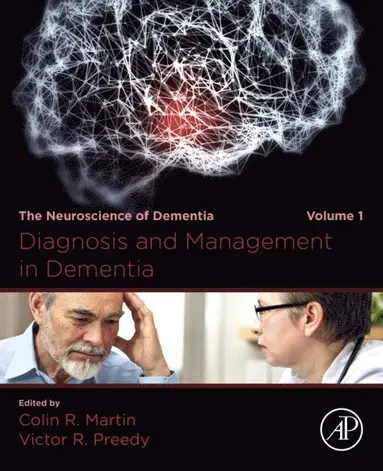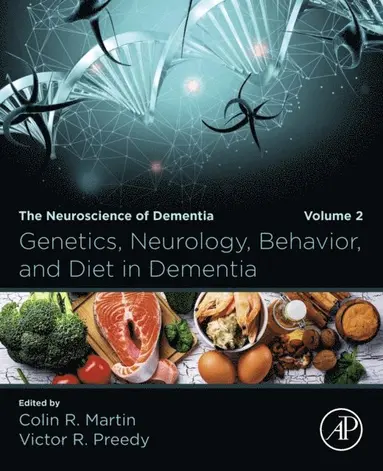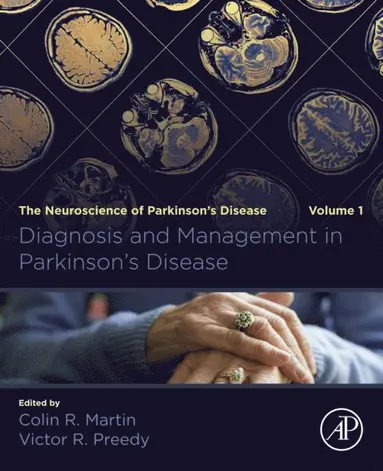
The Neuroscience of Dementia
AvColin R. Martin,Victor R. Preedy
3 551 kr
Beställningsvara. Skickas inom 10-15 vardagar. Fri frakt över 249 kr.
Beskrivning
Produktinformation
- Utgivningsdatum:2020-12-29
- Mått:216 x 276 mm
- Vikt:4 530 g
- Format:Inbunden
- Språk:Engelska
- Antal sidor:1 920
- Förlag:Elsevier Science
- ISBN:9780128160435
Utforska kategorier
Mer om författaren
Colin R. Martin RN, BSc, MSc, PhD, MBA, YCAP, FHEA, C.Psychol, AFBPsS, C.Sci is Professor of Clinical Psychobiology and Applied Psychoneuroimmunology and Clinical Director of the Institute of Health and Wellbeing at the University of Suffolk, UK. He is a Chartered Health Psychologist and a Chartered Scientist. He also trained in analytical biochemistry, this aspect reflecting the psychobiological focus of much of his research within mental health. He has published or has in press well over 300 research papers and book chapters. He is a keen book author and editor having written and/or edited more than 50 books. These outputs include the prophetic insight into the treatment of neurological disease, Handbook of Behavior, Food and Nutrition (2011), Nanomedicine and the Nervous System (2012), Oxidative Stress and Dietary Antioxidants in Neurological Disease (2020), Zika Virus Impact, Diagnosis, Control and Models (2021), Factors Affecting Neurodevelopment: Genetics, Neurology, Behavior and Diet (2021), Diagnosis and Treatment of Spinal Cord Injury (2022), The Neurobiology, Physiology, and Psychology of Pain (2022) and The Handbook of Lifespan Cognitive Behavioral Therapy: Childhood, Adolescence, Pregnancy, Adulthood, and Aging (2023). Professor Martin is particularly interested in all aspects of the relationship between underlying physiological substrates and behavior, particularly in how these relationships manifest in both acute and chronic psychiatric disorder. He has published original research germane to significant mental health disorders including the areas of schizophrenia, anxiety, depression, self-esteem, alcohol and drug dependency, high secure forensic mental health and personality disorder. He has a keen interest in the impact of postviral illness and is actively involved in clinical research post-Covid pandemic and in particular, the impact of Long Covid on psychological, neurological, physiological and social functioning. He is involved in collaborative International research with many European and Non-European countries. Victor R. Preedy, BSc, PhD, DSc, FRSB, FRSPH, FRCPath, FRSC, FRSM, is Professor of Clinical Biochemistry (Hon) at King’s College Hospital and Emeritus Professor of Nutritional Biochemistry at King’s College London. He also holds an Honorary Professorship at the University of Suffolk and served as the long‑term Director of the Genomics Centre at King’s College London from 2006 to 2020. Professor Preedy graduated with an Honours Degree in Biology and Physiology with Pharmacology and later obtained his PhD from the University of London. He subsequently received Membership of the Royal College of Pathologists and later earned his second doctorate (DSc) in recognition of his contributions to protein metabolism. He is a Fellow of the Royal Society of Medicine, the Royal Society of Biology, the Royal College of Pathologists, the Royal Society for the Promotion of Health, the Royal Institute of Public Health and Hygiene, the Royal Society for Public Health, and the Royal Society of Chemistry. Professor Preedy has conducted research while affiliated with Imperial College London, the School of Pharmacy (now part of University College London), and the MRC Centre at Northwick Park Hospital. He has collaborated widely with international research groups in Finland, Japan, Australia, the USA, and Germany. His longstanding academic interests include health and well‑being. He has published more than 750 works, including peer‑reviewed research articles, abstracts, symposium presentations, reviews, and edited books.
Recensioner i media
"This book is a must-have for anyone dealing with dementia in their clinical practice or research." --Doody
Innehållsförteckning
- DIAGNOSIS AND MANAGEMENT IN DEMENTIAI. Dementia: Introductory Chapters and Setting the Scene1. Mixed dementia: an overview; 2. Vascular dementia: an overview; 3. Small vessel disease and dementia; 4. Linking Amyotrophic lateral sclerosis (ALS) and Frontotemporal dementia; 5. Mortality in dementia: linking in delirium; 6. Midlife diabetes and the risk of dementia- understanding the link; 7. Gait and Alzheimer's disease /Gait and dementia; 8. Hypertension and dementia; 9. Genetics of dementia: focus on Alzheimer’s disease; 10. Clinical and pathological phenotypes in autosomal dominant frontotemporal dementia; 11. Risk factors in dementia: genetic and nongenetic; 12. Lipidomics and biomarker in Alzheimer’s disease; 13. The 5xFAD mouse model of Alzheimer’s diseaseII. Biomarkers, Psychometric Instruments and Diagnosis14. Use of cerebrospinal fluid in diagnosis of dementia; 15. Salivary biomarkers in Alzheimer’s disease; 16. Diacylglycerols as biomarkers in dementia; 17. Butyrylcholinesterase (BChE) as a biomarker in Alzheimer’s disease; 18. Blood brain-derived neurotrophic factor as a biomarker of Alzheimers disease; 19. Methods of amyloid PET Imaging and its applications to Alzheimer’s disease spectrum; 20. Applications of diffusion-weighted imaging (DWI) Tractography and Alzheimer’s disease; 21. Transcranial Magnetic stimulation and diagnostic applications to dementias; 22. Retinal imaging and dementia as a diagnostic tool; 23. The prediction of Alzheimer’s disease; 24. Addenbrooke's Cognitive Examination; 25. The Montreal Cognitive Assessment (MoCA) and applications to dementia; 26. ALBA Screening Instrument (ASI) and applications to dementia; 27. The Quick Mild Cognitive Impairment (Qmci) screen and applications to dementia; 28. Assessment of activities of daily living (ADL) applied to dementiaIII. Pharmacological Treatments for Dementia29. Cholinesterase inhibitors in dementias: an overview; 30. Choline-containing phospholipids and treatment of adult-onset dementia disorders; 31. Donepezil usage: a focused review; 32. Memantine: a focused review; 33. The benefits of calcium channel blockers for the therapy of dementia; 34. Pitfalls for pharmacotherapeutic trials in dementia; 35. All-trans retinoic acid in Alzheimer’s disease; 36. Dementias and usage of NMDA receptor antagonists; 37. Dementia and bladder dysfunction: a focus on treatments with anticholinergics; 38. Linking astrocytes' exosomes to Alzheimer's pathogenesis and therapy; 39. Changing the fate: therapeutic mechanisms focus on the switch of beta-amyloid precursor protein (APP) processing; 40. Acetylcholinesterase inhibitory agents in plants and application to dementia: Alzheimers Disease; 41. Removal of blood amyloid as a safety strategyIV. Non-Pharmacological Treatments and Procedures42. Caring for people with Dementia in the Acute Hospital; 43. Environmental enrichment in dementia; 44. Music therapy in dementia; 45. Aromatherapy in dementia; 46. Dancing in dementia; 47. Hypoxic-hyperoxic training and dementia; 48. Linking amyloid and depression in dementia: effects of treatments by non-drug means; 49. Regional dementia care networks; 50. Cognitive behavioural therapy (CBT) use in Alzheimer’s disease; 51. Maximizing cognition in Mild Cognitive Impairment and early-stage dementia; 52. Exercise, cognitive creativity, and dementia; 53. Linking care staff, person-focused communications and dementiasGENETICS, NEUROLOGY, BEHAVIOR, AND DIET IN DEMENTIAI. Genetics, Molecular and Cellular Biology1. The genetics of Alzheimer’s disease: a focus on the neuron navigator 2 gene; 2. Interlinking polymorphisms, estrogens and Alzheimer’s disease; 3. Linking EEGs, Alzheimer’s disease and the Phosphatidylinositol binding clathrin assembly protein (PICALM) gene; 4. CD36 gene polymorphism and Alzheimer’s disease; 5. Genetic contributions to sporadic frontotemporal dementia; 6. Dementia and CYP2D6 polymorphisms; 7. A1 purinergic receptor gene expression in dementia; 8. Molecular aspects of metallothionein-1 in dementias; 9. MicroRNAs in Alzheimer's disease; 10. Oxidative stress and neurons in dementia; 11. Toward an integrative understanding of the neuroinflammatory molecular milieu in Alzheimer's disease neurodegeneration; 12. Wnt Signalling and dementia; 13. Linking PKC, PKClambda/I and Alzheimer’s disease; 14. Linking histone deacetylases, phosphodiesterase 5 and novel treatments Alzheimer’s disease; 15. Linking Nrf2 and Alzheimer's disease; 16. Role of alpha- and beta-secretase in Alzheimer’s disease; 17. Methylation analysis of DNA in Alzheimer’s disease; 18. The signalosome malfunctions in age-associated neuropathologies; 19. ILEI/FAM3C in Alzheimer’s disease; 20. Amylin and Alzheimer’s disease; 21. Mammalian target of rapamycin (mTOR) complexes: Regulation and Alzheimer's disease; 22. Mammalian target of rapamycin (mTOR) complexes: Protein synthesis and autophagy, Parkinson's Disease, Amyotrophic Lateral Sclerosis and frontotemporal dementia; 23. Linking CD200 in brains and dementia: molecular aspects of neuroinflammationII. Neurological, Physiological and Imaging 24. Hippocampal atrophy and dementia; 25. Inflammation and insulin resistance in AD: partners in crime; 26. Neuronal susceptibility to hypoxia in Alzheimer disease; 27. Neuropeptides and Neurolipids: what they are and how they relate to Alzheimer's disease; 28. Brain receptors in Alzheimer’s disease; 29. Abeta42-alpha7-like nicotinic acetylcholine receptors and Alzheimer’s disease; 30. Synaptosomal bioenergetics in Alzheimer’s disease; 31. Limitations of amyloid-PET imaging; 32. Linking Gradient Echo Plural Contrast Imaging (GEPCI) Metrics of Tissue Microstructure with Alzheimer's disease; 33. Hypertensive disorders in pregnancy and later dementia; 34. Sleep architecture and the development of clinical dementiaIII. Behaviour and Psychopathology35. An overview of behavioural and psychiatric symptoms of dementia; 36. Delirium superimposed on dementia: from diagnosis to treatment; 37. Self-Consciousness Deficits in dementia; 38. Attention impairments, novel images and Alzheimer’s disease; 39. Frontal Lobe Syndrome and Dementias; 40. The stigma of dementia; 41. Delusions in dementias; 42. Linking motor speech function and dementia; 43. Spatial Navigation and Alzheimer’s disease; 44. Violence and dementia; 45. Caregiver depression in dementiaIV. Diet, Nutrition and Environment 46. Nutritional status in dementia; 47. Selenium and Alzheimer’s disease; 48. Linking adiponectin and obesity in dementia; 49. The gut microbiome in Alzheimer's disease; 50. (-)-epigallocatechin-3-gallate (EGCG) and Alzheimer disease; 51. Cadmium and Alzheimer’s diseaseV. Models And Modelling In Dementia52. Alzheimer's model 5xFAD mice as a model and applications to dementia; 53. Use of 192 IgG-saporin as a model of dementia and its application; 54. Abeta1-42 oligomer animal model of dementia
Mer från samma författare
Hormones in Neuroscience
Colin R. Martin, Vinood B. Patel, Victor R. Preedy, Rajkumar Rajendram
Häftad, 2026
2 081 kr
Diet and Nutrition in Dementia and Cognitive Decline
Victor R. Preedy, Colin R. Martin
3 108 kr
Metabolism and Pathophysiology of Bariatric Surgery
Victor R. Preedy, Rajkumar Rajendram, Colin R. Martin
Häftad, 2016
1 648 kr
Metabolism and Pathophysiology of Bariatric Surgery
Colin R. Martin, Rajkumar Rajendram, Victor R. Preedy
1 742 kr
Genetics, Neurology, Behavior, and Diet in Dementia
Colin R. Martin, Victor R. Preedy
Inbunden, 2020
2 068 kr
Genetics, Neurology, Behavior, and Diet in Dementia
Victor R. Preedy, Colin R. Martin
2 863 kr
Genetics, Neurology, Behavior, and Diet in Parkinson's Disease
Colin R. Martin, Victor R. Preedy
Inbunden, 2020
2 068 kr
Du kanske också är intresserad av
- -15% på allt
Finite Geometries, Groups, and Computation
Alexander Hulpke, Robert Liebler, Tim Penttila, Akos Seress
Inbunden, 2006
3 551 kr