

The Man Who Would Eat Africa
Cecil Rhodes and the Making of an Empire
Inbunden, Engelska, 2027
301 kr
Kommande. Bevaka för att få ett mejl när produkten kan beställas.
Beskrivning
From the award-winning biographer and pre-eminent scholar, a revelatory biography of Cecil Rhodes – the diamond magnate, empire-builder, and architect of racial subjugation whose ambitions reshaped a continent and whose shadow falls across our own moment. In June 1870, a gangling seventeen-year-old boy stood on the pier at Gravesend and boarded a sailing ship bound for South Africa. He was the seventh child of an Anglican vicar, awkward and shy, dispatched to join his older brother on a cotton farm in Natal. He had no particular gifts that anyone could see.Within two decades, Cecil John Rhodes controlled ninety percent of the world's diamond supply, pioneered the joint stock company, governed the Cape Colony as its prime minister, and had conjured – through a mixture of visionary calculation, brazen deception, and spectacular violence – a territory the size of Western Europe that bore his name.How does a man achieve that? And what does it cost?In The Man Who Would Eat Africa, award-winning author Jonny Steinberg draws on a wealth of previously unexamined personal documents – letters, diaries, wills, and the recollections of those who knew Rhodes most intimately – to offer the most penetrating and comprehensive portrait yet of one of history's most consequential and troubling figures.The Rhodes he reveals is a figure of startling psychological complexity. A child starved of parental love who spent his life manufacturing substitutes. A man of genuine commercial genius who also bribed, defrauded, and deceived with magnificent ruthlessness. A conqueror who commissioned massacres and a romantic who wept in public, nursed the dying, and kept beside him, in his final hours, the young man he loved most in the world.Steinberg follows Rhodes from the humiliating failures of his cotton-farming years through the brutal crucible of Kimberley's diamond rush, where he learned to see the world as a Venn diagram of overlapping interests and to exploit that vision without mercy. We watch him navigate Cape politics with counterintuitive brilliance, forging an alliance with Afrikaner farmers that would help hollow out the Cape's non-racial franchise and lay groundwork for the racial order that followed. We see him in London, charming and threatening Rothschild and Chamberlain in turn, conjuring a chartered company from legal fiction and imperial anxiety. And we follow him into the Matopos hills, where he negotiated peace with the Ndebele rebels he had helped to ruin and chose the site of his own tomb.Throughout, Steinberg situates Rhodes within the larger forces that made him possible: Britain's gathering anxiety about imperial decline, the scramble for Africa among competing European powers and the rise of industrial capitalism.The Man Who Would Eat Africa is also a biography for our moment. Rhodes’s life offers the spectacle of a middling man inflated to mythic scale by an empire's anxieties; the circle of young acolytes kept close through a mixture of patronage, intimacy, and control; the belief that personal destiny and national destiny are the same thing. These patterns, as Steinberg shows, are very much still with us.
Produktinformation
Utforska kategorier
Mer om författaren
Recensioner i media
Hoppa över listan
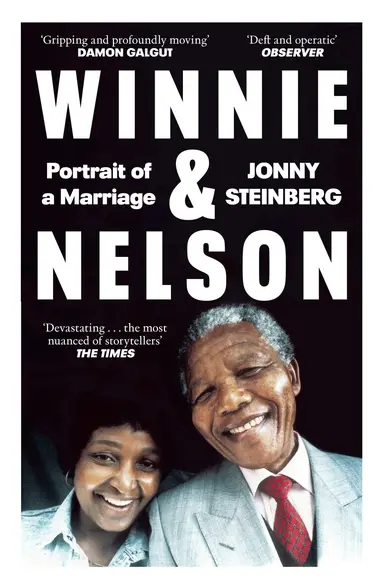




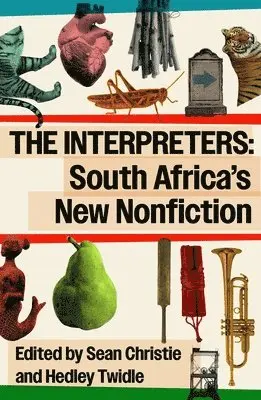
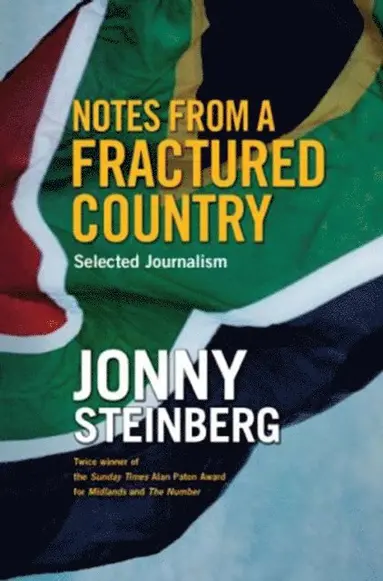
Mer från samma författare
undefined
J.M. Coetzee, Antjie Krog, Jonny Steinberg, Rian Malan, Mark Gevisser, Njabulo Ndebele, Kimon De Greef, William Dicey, Sean Christie, Hedley Twidle
Häftad, 2025
324 kr
Hoppa över listan



Du kanske också är intresserad av
- -15% på allt
The SAGE Handbook of Global Policing
Ben Bradford, Beatrice Jauregui, Ian Loader, Jonny Steinberg
Inbunden, 2016
2 583 kr
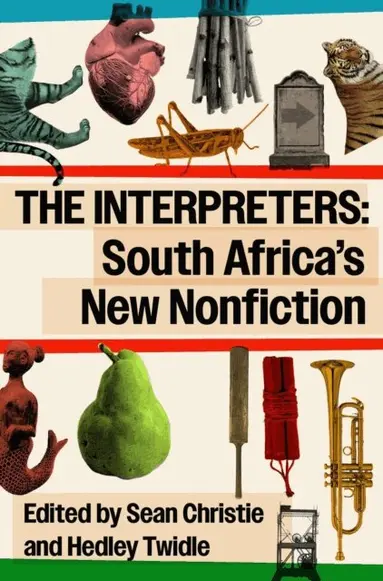
Interpreters: South Africa's New Nonfiction
Anton Kannemeyer, Rustum Kozain, William Dicey, Kimon de Greef, Njabulo S. Ndebele, Zanele Mji, Mark Gevisser, Bongani Kona, Rian Malan, Antjie Krog, Jonny Steinberg, J.M. Coetzee, Hedley Twidle, Sean Christie
E-bok
225 kr